Valencia
The Cup El Carmen Has Kept Since the Last Supper (Or So They Say)
In El Carmen, the Cathedral holds a 1st-century stone cup that two popes have used to say Mass: the best-documented candidate for the Holy Grail.
A cup of stone, not gold
Forget the gold, gem-covered cup from the movies. The Holy Chalice venerated in Valencia Cathedral, a short walk from the Lonja and the heart of El Carmen, is a bowl of polished agate barely 7 centimeters tall and 9.5 in diameter, mounted on a medieval goldsmith's stem added centuries later. It lives in its own chapel, behind a grille, separated from worshippers and the curious by a glass case. It doesn't impress by size or shine: it impresses because of what's been written about it for close to a thousand years.
What the stone can actually date
The agate part, the only piece that could genuinely be ancient, has been under archaeological study for decades. The classic reference, from Professor Antonio Beltrán in 1960, places it around the turn of the era, between the 1st century BC and the 1st century AD, carved in a workshop in the eastern Mediterranean. A later study, from 2019, proposes something more specific: that it's a Jewish blessing cup, of the same type used at ritual dinners in the time of Herod the Great. If that dating holds up, the object could indeed have stood on a table like the one at the Last Supper. That it stood on that exact table is something no archaeologist can sign off on.
From a cave in Huesca to a king's table
The documented trail — leaving aside the legend of how it left Rome — begins in the Aragonese Pyrenees. In 1071, the Bishop of Jaca brought it to the monastery of San Juan de la Peña, and a document from that same monastery, dated 1134, already describes it as the chalice in which Christ consecrated his blood, kept at the time in an ivory chest. From there it passed to the royal chapel of the kings of Aragon, until Alfonso the Magnanimous, who already kept it among his personal belongings, handed it over to the Chapter of Valencia Cathedral in 1437, as collateral for a loan of 40,000 gold ducats. The debt stayed on paper; the cup has stayed in El Carmen, almost 600 years later.
Two popes, and only two, have said Mass with it
For centuries, no pope celebrated the Eucharist with this chalice. That changed on 8 November 1982: John Paul II, visiting Valencia, asked to use it and became the first pope in history to say Mass with it. The second was Benedict XVI, on 9 July 2006, at the closing Mass of the World Meeting of Families, before more than a million people gathered at the City of Arts and Sciences. To this day, those two remain the only ones.
The Grail? That depends who you ask
No one can prove that this particular cup touched Christ's lips: that's a matter of faith, not archaeology. What is verifiable is that, of all the cups presented as the Grail in different corners of Europe over the centuries, this is the only one two popes have personally used to consecrate at Mass. Historians and archaeologists still argue over the details, but they agree on the essential point: it's the candidate with the best documented trail of them all. The rest is for each person to fill in with whatever faith they have to spare.
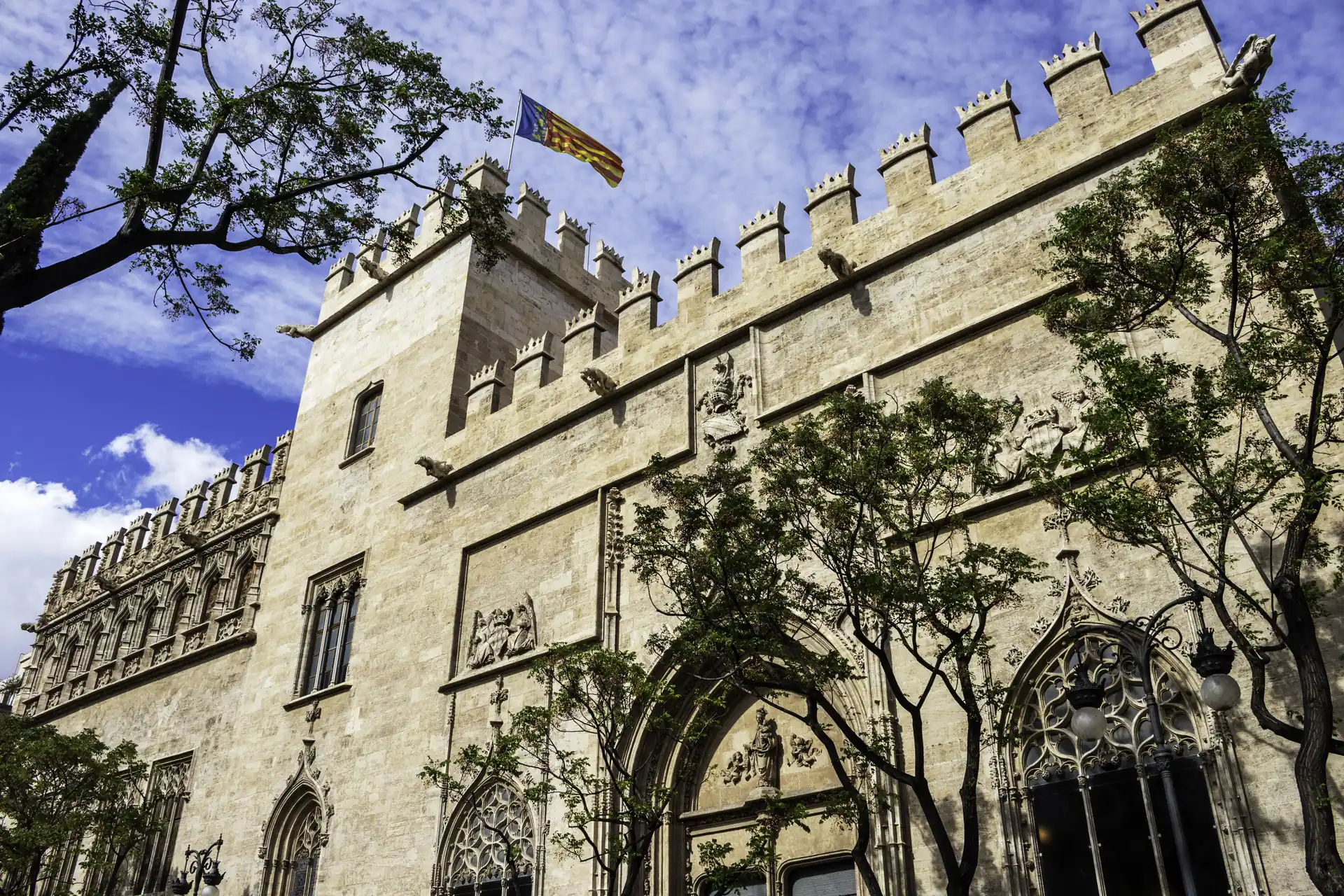
All of this — the cup, the chapel, the two popes who said Mass with it — sits a short walk from the Lonja de la Seda, among the same streets of El Carmen where silk merchants and entire guilds once haggled. If this has left you wanting to see the chapel with your own eyes, The Merchants' Grail crosses that same triangle of the old town and takes you, puzzle by puzzle, right up to the door of the Holy Chalice.