Rome
What Trastevere Has Been Showing for Centuries, Unnoticed
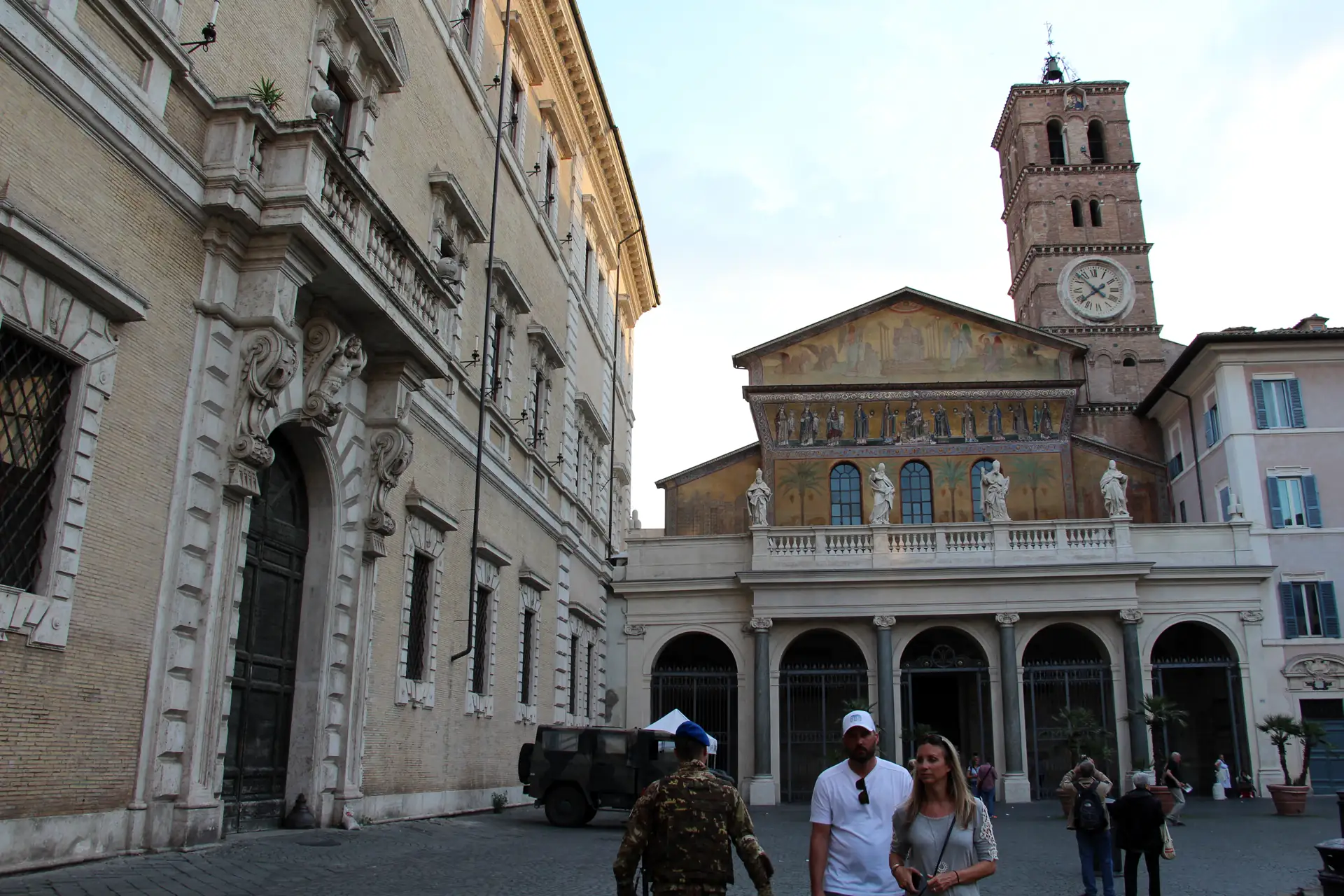
Trastevere sat outside Rome's walls for centuries, and its residents still feel more Trasteverino than Roman.
Roman, but outside the walls
When Augustus organized Rome into fourteen administrative regions, around 7 BC, Trastevere made the map as Regio XIV, the largest in area of the fourteen. And yet it stood outside the Servian Wall, the city's first great wall, and outside the pomerium, the sacred boundary that separated what officially counted as Rome from what didn't. The district wasn't enclosed within a wall until Emperor Aurelian built his own, between 270 and 275 AD. Whole generations of Trasteverini lived and died Roman on paper, but outside Rome in practice.
A port district, not a patrician one
While the hills on the other bank filled up with forums, temples and patrician residences, Trastevere grew up around the water: fishermen, sailors and dockworkers unloading at the Ripa Grande the goods shipped up from the port of Ostia. Already in Republican times it was, above all, a district of river workers, not the place where a Roman with political ambitions chose to build his house. That working, portside character shaped it for centuries: from the start, Trastevere was the district that made Rome run, not the one that represented it.
Rome's first foreigners
Rome's first Jews settled in Trastevere in the 2nd century BC, as part of a trade delegation sent from Judea; over the centuries they formed here one of the oldest, most continuous Jewish communities in the entire diaspora, long before the papacy forced a move to the Ghetto, on the other bank, in 1555. The district also took in Syrian merchants, soldiers and sailors, who brought their own gods with them: on the slope of the Janiculum, excavations have uncovered a sanctuary dedicated to Jupiter Heliopolitanus, the chief Syrian deity, with an initial phase from the mid-1st century AD and a rebuild dated between 176 and 180 AD.
A language that isn't the one across the river
Out of that mix came, over the centuries, its own variant of Roman speech: Trasteverino, with shades of pronunciation and vocabulary that a local ear can still tell apart from the Romanesco spoken on the other side of the river. The difference was never just linguistic. For generations, Trasteverini considered themselves the most authentic Romans, more "of Rome" than the Romans of the center itself, and there are still people today who introduce themselves as Trasteverino first, and only afterward, if at all, as Roman.
Noantri: we, the others
That way of marking distance even has its own name: the Festa de Noantri, which fills the district's squares with processions and street tables every July. "Noantri" comes from noi altri, "we others," a name that flatly declares that the people of Trastevere form a "we" apart from the rest of Rome. The festival began in 1535, when fishermen found a cedar-wood image of the Virgin at the mouth of the Tiber, the Madonna Fiumarola, who has been the district's patron saint ever since.
None of this is explained on a plaque. You notice it in how some older residents still speak, in the date Trastevere breaks into festival every July, and in the layout of a district that took Rome centuries to fully let in. The Prow of Trastevere walks its streets with that same idea in mind: looking closely at what this district has been telling anyone who stops to read it, all along.